


Collection: Trusted Wooden Brands
Trusted Wooden Toy Brands — Because Not All Wooden Toys Are Created Equal
If you've ever stood in front of a wall of wooden toys wondering which ones are actually well-made and which ones are just plastic toys in a wooden disguise, you're not alone. The truth is, the toy industry has caught on to the wooden toy trend — and not always in good ways. This collection is our answer to that confusion: a curated edit of the brands we genuinely trust to do wooden toys properly.
Are all wooden toys really the same?
No — and the difference matters. The wooden toy aisle includes everything from heirloom-quality, hand-carved pieces to mass-produced softwood toys finished with cheap glues and synthetic paints. They look similar on a shelf, but they're worlds apart in safety, durability, and play value. Knowing what to look for is what separates a toy that lasts a decade from one that ends up in landfill within a year.
What should I look for in a well-made wooden toy?
Four things make the biggest difference: the type of wood, the finish, the craftsmanship, and the maker's transparency. Look for solid hardwoods like beech, lime, linden, or maple rather than plywood, softwood, or composite materials. Finishes should be water-based dyes, natural beeswax, or food-grade oils — never synthetic lacquers, varnishes, or unspecified "non-toxic paint" with no documentation. Craftsmanship should show — smooth edges, consistent finishing, solid weight in the hand. And a trustworthy maker will be transparent about where their wood comes from, how it's finished, and who's making it.
Why are some wooden toys cheap?
Because they cut corners that aren't always visible at a glance. Cheap wooden toys are often made from softwood or thin plywood that splinters and chips. They may use industrial glues containing formaldehyde, paints that aren't truly non-toxic by international standards, and finishes that flake or peel. Production is typically outsourced to factories with little oversight on labour conditions or environmental practices. The price reflects the corners cut — not better value.
What types of wood are best for children's toys?
The best toy woods are dense, durable hardwoods that don't splinter easily and hold up to years of play. Beech is the most common in heirloom toy-making — it's strong, smooth, and finishes beautifully. Lime wood (also called linden) is soft enough to carve intricately yet durable enough to last generations, which is why brands like Ostheimer use it. Maple, cherry, and birch are also excellent. Avoid plywood, MDF, particleboard, and softwoods like pine for toys that will be handled regularly.
What finishes are safe for wooden toys?
The safest finishes are natural and food-grade: beeswax, jojoba oil, linseed oil, and water-based non-toxic dyes are all excellent choices. These are safe even for babies who mouth their toys. Avoid wooden toys with unspecified "non-toxic paint" — true safety standards include EN 71-3 (European), ASTM F963 (North American), and OEKO-TEX certifications. The brands in this collection meet or exceed these standards.
Which wooden toy brands do you trust most?
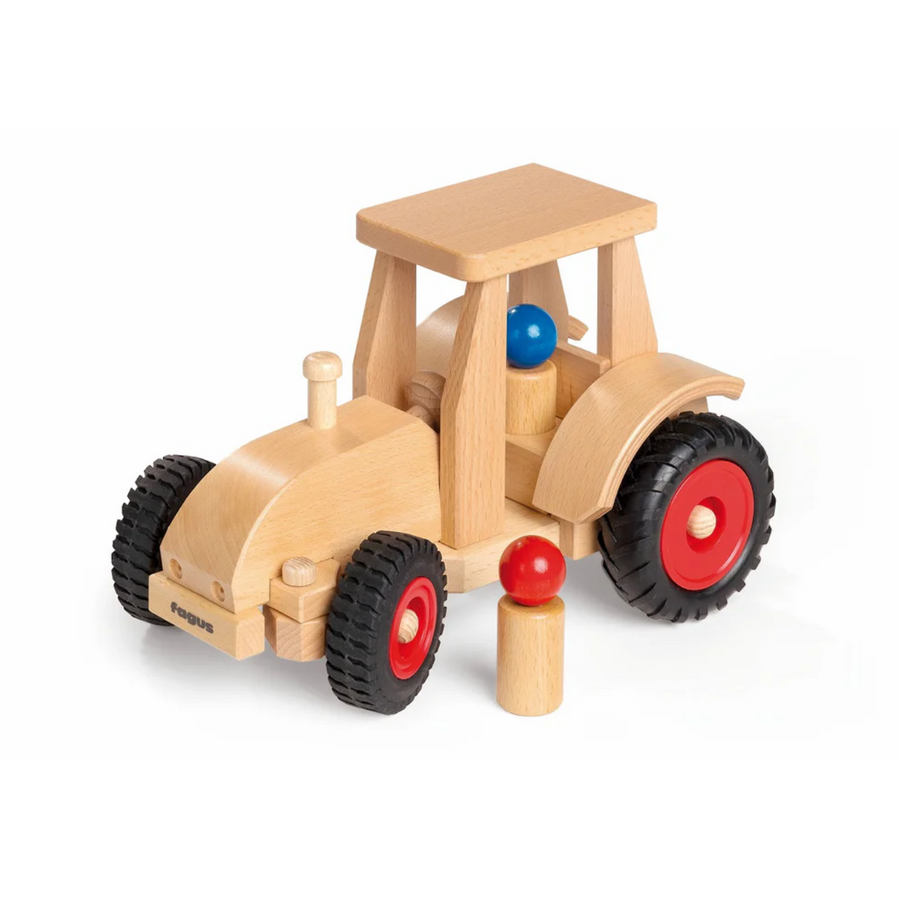
Every brand in this collection has been chosen for craftsmanship, material quality, ethical production, and longevity. Grimm's handcrafts rainbow stackers, building sets, and figurines in Germany using linden wood and non-toxic water-soluble dyes — pieces designed to evolve with a child across years. Grapat creates open-ended loose parts in Spain from FSC-certified beech wood and non-toxic dyes, with a philosophy of no instructions and no rules. Ostheimer hand-carves each wooden animal and figure individually in Germany using sustainably sourced lime wood and natural beeswax — true heirloom craftsmanship you can feel in every piece. Bumbu Toys handcrafts detailed wooden figures and landscapes in small batches in Romania using sustainably sourced wood, non-toxic paint, and natural beeswax. Fagus crafts premium beech wood vehicles and ride-ons in a family-run German workshop, finished with water-based lacquers and built to be passed down.
How can I tell if a wooden toy is actually well-made?
Pick it up. A well-made wooden toy has weight to it — solid hardwood feels substantial, not hollow. The edges should be smooth and rounded, with no rough spots or splinters. The finish should look even and feel silky, not sticky, tacky, or strongly chemical-smelling. Joints should be tight and secure. And the maker should be willing to tell you exactly where the wood comes from and what's on it — if that information isn't easy to find, that's information in itself.
Are these brands worth the higher price?
Yes. A single Grimm's rainbow, Ostheimer figure, or Fagus vehicle will outlast dozens of cheap wooden alternatives, hold its quality across siblings, and often become an heirloom passed through generations. The cost per year of play is often lower than mass-market alternatives — and the safety, sustainability, and play value are incomparable.
Trusted Wooden Toy Brands — Because Not All Wooden Toys Are Created Equal
If you've ever stood in front of a wall of wooden toys wondering which ones are actually well-made and which ones are just plastic toys in a wooden disguise, you're not alone. The truth is, the toy industry has caught on to the wooden toy trend — and not always in good ways. This collection is our answer to that confusion: a curated edit of the brands we genuinely trust to do wooden toys properly.
Are all wooden toys really the same?
No — and the difference matters. The wooden toy aisle includes everything from heirloom-quality, hand-carved pieces to mass-produced softwood toys finished with cheap glues and synthetic paints. They look similar on a shelf, but they're worlds apart in safety, durability, and play value. Knowing what to look for is what separates a toy that lasts a decade from one that ends up in landfill within a year.
What should I look for in a well-made wooden toy?
Four things make the biggest difference: the type of wood, the finish, the craftsmanship, and the maker's transparency. Look for solid hardwoods like beech, lime, linden, or maple rather than plywood, softwood, or composite materials. Finishes should be water-based dyes, natural beeswax, or food-grade oils — never synthetic lacquers, varnishes, or unspecified "non-toxic paint" with no documentation. Craftsmanship should show — smooth edges, consistent finishing, solid weight in the hand. And a trustworthy maker will be transparent about where their wood comes from, how it's finished, and who's making it.
Why are some wooden toys cheap?
Because they cut corners that aren't always visible at a glance. Cheap wooden toys are often made from softwood or thin plywood that splinters and chips. They may use industrial glues containing formaldehyde, paints that aren't truly non-toxic by international standards, and finishes that flake or peel. Production is typically outsourced to factories with little oversight on labour conditions or environmental practices. The price reflects the corners cut — not better value.
What types of wood are best for children's toys?
The best toy woods are dense, durable hardwoods that don't splinter easily and hold up to years of play. Beech is the most common in heirloom toy-making — it's strong, smooth, and finishes beautifully. Lime wood (also called linden) is soft enough to carve intricately yet durable enough to last generations, which is why brands like Ostheimer use it. Maple, cherry, and birch are also excellent. Avoid plywood, MDF, particleboard, and softwoods like pine for toys that will be handled regularly.
What finishes are safe for wooden toys?
The safest finishes are natural and food-grade: beeswax, jojoba oil, linseed oil, and water-based non-toxic dyes are all excellent choices. These are safe even for babies who mouth their toys. Avoid wooden toys with unspecified "non-toxic paint" — true safety standards include EN 71-3 (European), ASTM F963 (North American), and OEKO-TEX certifications. The brands in this collection meet or exceed these standards.
Which wooden toy brands do you trust most?
Every brand in this collection has been chosen for craftsmanship, material quality, ethical production, and longevity. Grimm's handcrafts rainbow stackers, building sets, and figurines in Germany using linden wood and non-toxic water-soluble dyes — pieces designed to evolve with a child across years. Grapat creates open-ended loose parts in Spain from FSC-certified beech wood and non-toxic dyes, with a philosophy of no instructions and no rules. Ostheimer hand-carves each wooden animal and figure individually in Germany using sustainably sourced lime wood and natural beeswax — true heirloom craftsmanship you can feel in every piece. Bumbu Toys handcrafts detailed wooden figures and landscapes in small batches in Romania using sustainably sourced wood, non-toxic paint, and natural beeswax. Fagus crafts premium beech wood vehicles and ride-ons in a family-run German workshop, finished with water-based lacquers and built to be passed down.
How can I tell if a wooden toy is actually well-made?
Pick it up. A well-made wooden toy has weight to it — solid hardwood feels substantial, not hollow. The edges should be smooth and rounded, with no rough spots or splinters. The finish should look even and feel silky, not sticky, tacky, or strongly chemical-smelling. Joints should be tight and secure. And the maker should be willing to tell you exactly where the wood comes from and what's on it — if that information isn't easy to find, that's information in itself.
Are these brands worth the higher price?
Yes. A single Grimm's rainbow, Ostheimer figure, or Fagus vehicle will outlast dozens of cheap wooden alternatives, hold its quality across siblings, and often become an heirloom passed through generations. The cost per year of play is often lower than mass-market alternatives — and the safety, sustainability, and play value are incomparable.


















The Playful Peacock Difference
-
About the Playful Peacock
The Playful Peacock was created in 2021 to curate creative, open-ended play for curious children. The Playful Peacock is privileged to operate in Tkaronto/Toronto.
-
Quality Toys Designed to Last
We are steadfast in our selection of toy makers that we work with.
Our offerings are from Canadian, female-owned, BIPOC and/or family-owned brands that are firmly rooted in environmental practices with strong ethical standards. We adamantly align ourselves with makers we are proud of and who are equally dedicated to sustainability, transparency and ethical labour, including paying living and fair wages. The majority of the toys these brands make are handmade, natural wooden toys that forge limitless play for kids to enjoy for years.
-
The Handmade Difference
The Playful Peacock’s toys are built with quality and care to last for generations. All of the toys are safe and made with individualized love and attention using a high-caliber of materials and finishes that do not include any harmful additives. Our toys will quickly become an heirloom through their high-quality and endless enjoyment.
-
Materials Matter
Plastic toys are typically mass-produced and easily breakable. These toys can contribute to sweatshops, unfair labour conditions and pollution in general.
While wooden toys are a step in the right direction, not all wooden toys are made the same. There are many wooden dupes to be aware of cheap, mass-produced wooden toys that are just as harmful as plastic! For example, softwood and plywood can chip and splinter easily, while non-handcrafted wooden toys often are filled with harmful toxic paints, finishes, and sealants.
Consciously opting for ethical, handcrafted wooden toys (renewable wood is even better) is safer for your child, is way more dependable and a kinder contributor to our already fragile planet.
The manufacturing process our makers use considers Mother Earth first through strict FSC Certifications, non-toxic paint, and planet-friendly materials across every single product. After placing an order, you will receive your newly beloved toy in 99% plastic-free, biodegradable, recyclable and compostable packaging, down to the stickers and tape.
-
The Right Toy At The Right Time
Children are naturally drawn to play toys that they can master and that is right for their particular stage of development.
With a wide range of toys available for kids ages 0-1, 1-2, 2-3 and 3+, you can ensure the toy is safe, age-appropriate, and developmentally appropriate, too. The majority of our toys focus on fun and subtle learning, and open-ended play, while being Montessori approved.
-
Ethical Toys Making A Difference
We are a purpose-first brand and a business second.
With a deep awareness that the toy industry must do better, we are committed to our part through advocacy for a range of social justice causes, environmental advancement and stringent criteria for makers. We are changemakers and give back through every purchase by donating meals to children in need across 26 Indigenous communities within Canada.