


Collection: Open-Ended Wooden Toys
Open-Ended Wooden Toys — The Toys That Never Get Old
If you've ever watched your child ignore the toy and play with the box, you already understand open-ended play better than most parenting books will tell you. This collection is built around that instinct — toys with no instructions, no right answer, and no batteries required. Just a child, their imagination, and the freedom to go wherever play takes them.
What are open-ended toys?
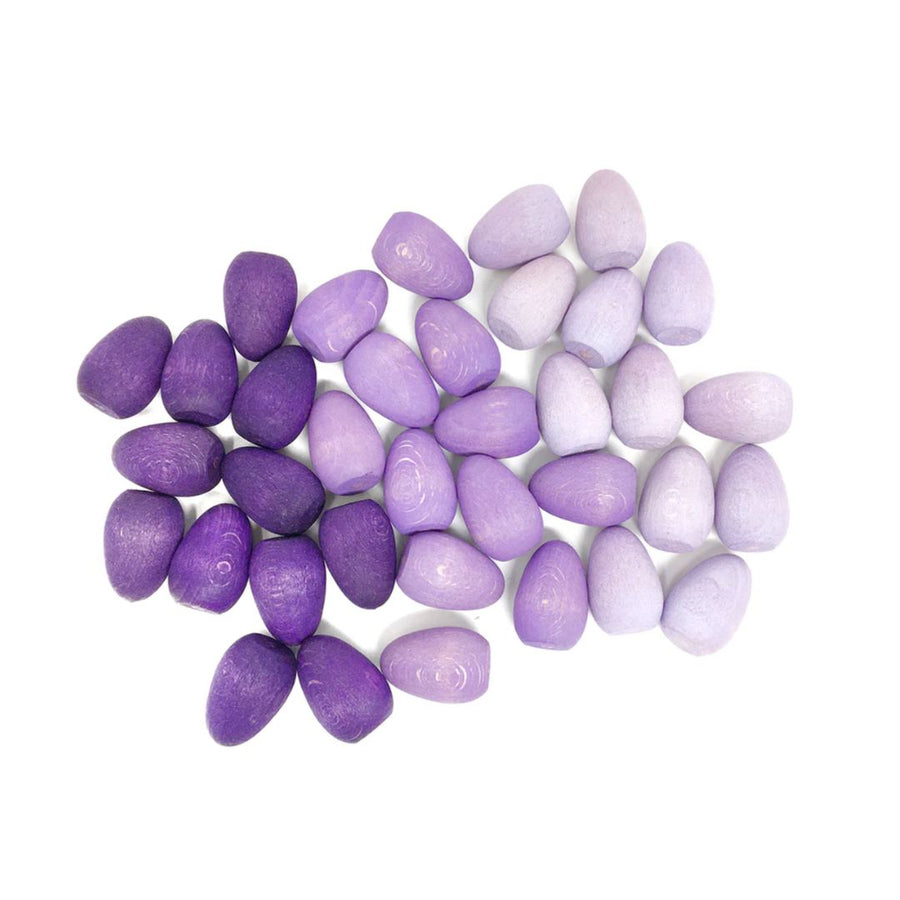
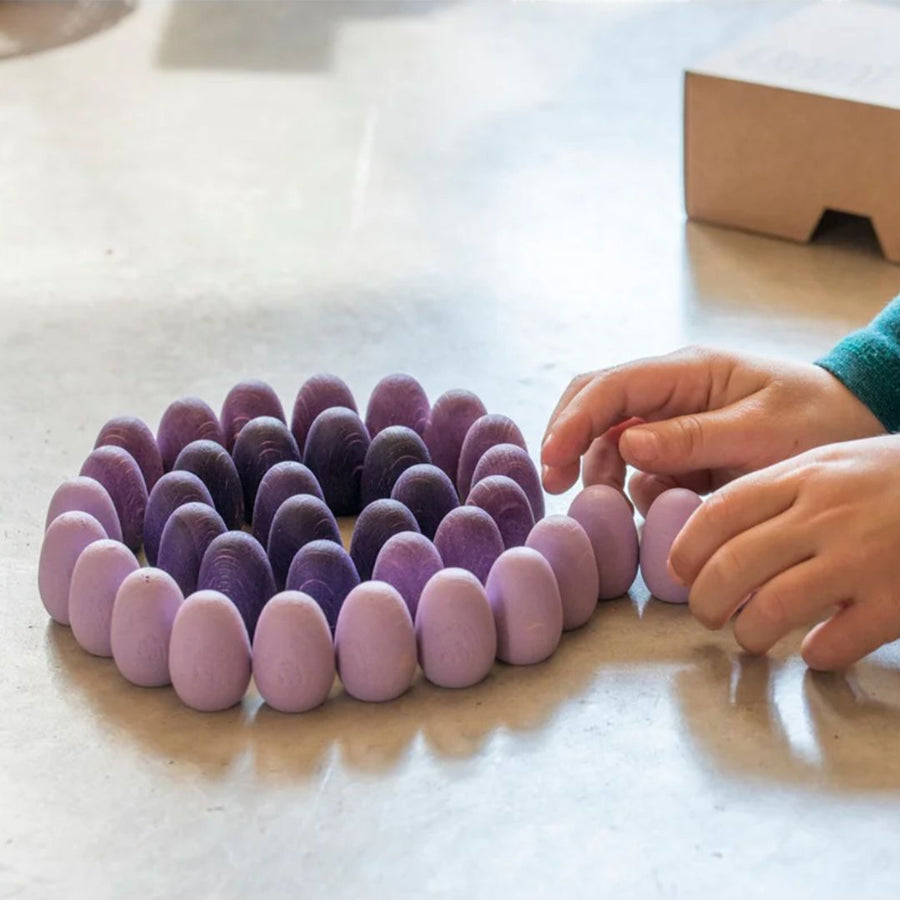
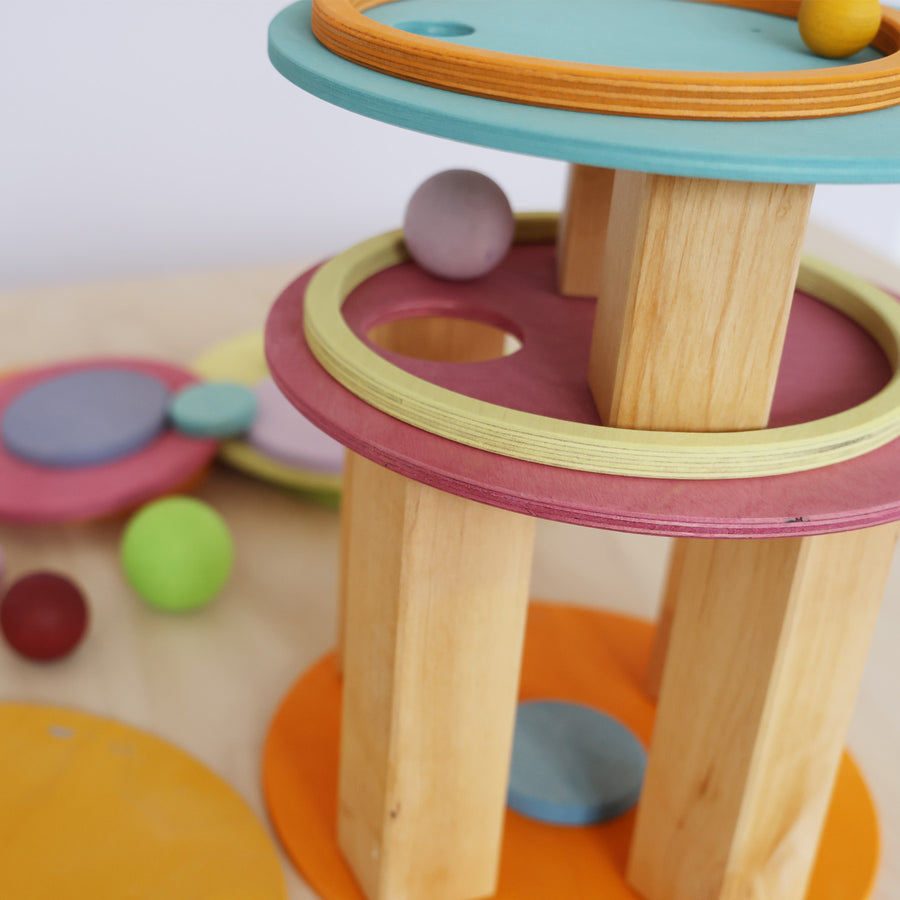
Open-ended toys are designed without a single predetermined outcome. There's no correct way to use them, no game to win, and no function that expires once a child figures it out. A set of Grapat nins can become a forest, a family, a counting game, or a colour sorting exercise — all in the same afternoon. That flexibility is the point.
Why are open-ended toys better for child development?
Because they follow the child rather than directing them. Open-ended play builds creative thinking, problem-solving, language development, emotional regulation, and concentration — all without a screen or a set of instructions. Research consistently supports unstructured, child-led play as one of the most important contributors to healthy cognitive and social development in early childhood.
What is the difference between open-ended toys and regular toys?
A regular toy typically has one function — press the button, hear the sound, complete the puzzle. Once a child masters it, the toy is done. An open-ended toy has no ceiling. It grows with a child's imagination, which means it stays relevant across years and developmental stages rather than months.
Are open-ended toys Montessori-aligned?
Yes. Open-ended, child-led play is a cornerstone of Montessori philosophy. Toys that invite exploration without instruction, use natural materials, and allow a child to set the pace and direction of play are central to the Montessori approach. Every toy in this collection reflects those principles.
What age are open-ended wooden toys suitable for?
Most open-ended wooden toys are suitable from toddlerhood through middle childhood and beyond — typically ages 1 to 8+, depending on the piece. Many evolve with a child: a set of Grimm's wooden blocks used for stacking at age two becomes a building material for elaborate worlds by age five. We've noted age guidance on every product page to help you choose.
Which brands do you carry in this collection?
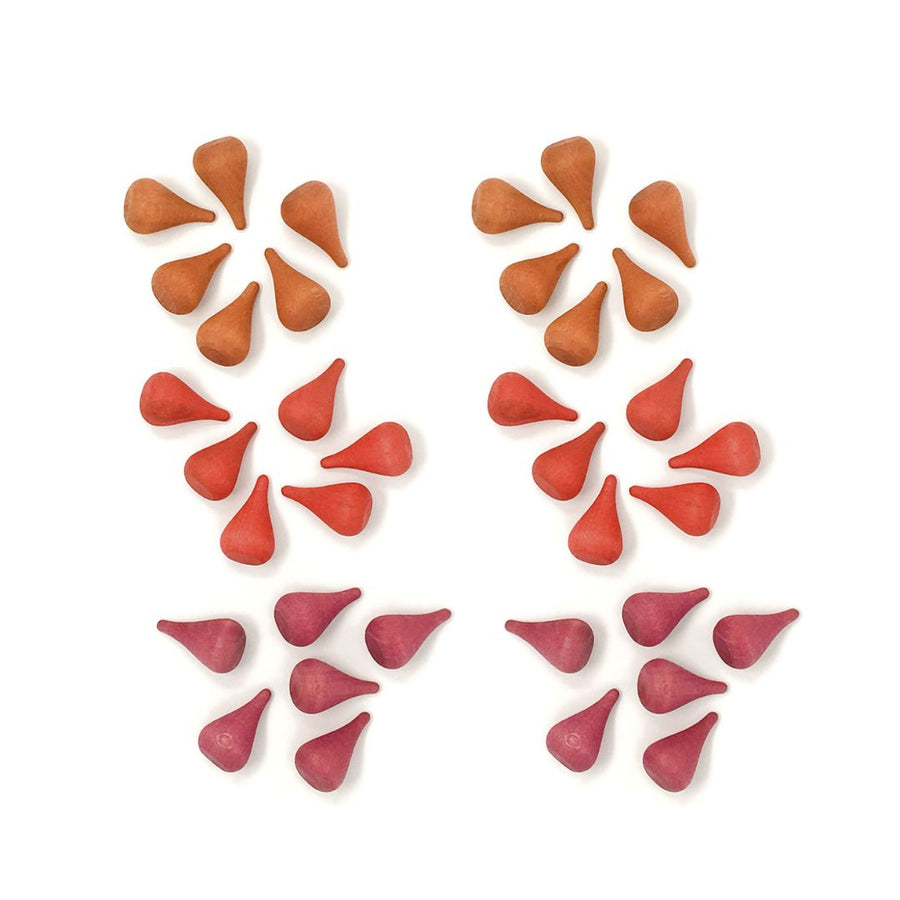
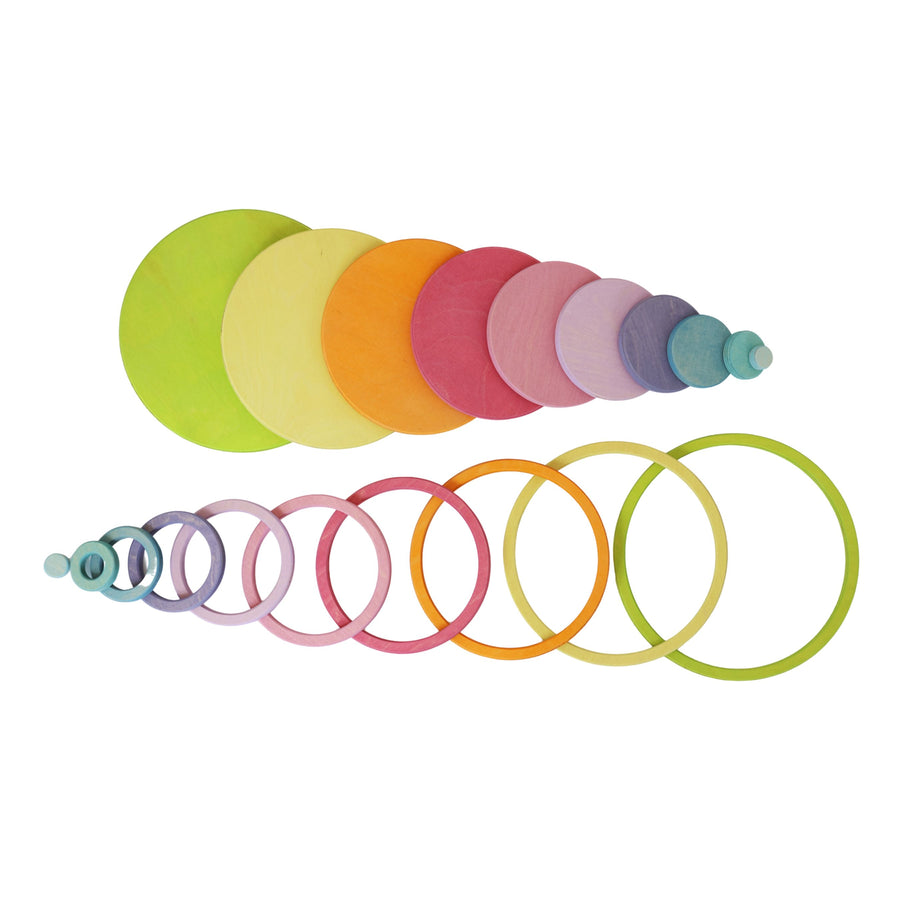
This collection features some of the most trusted names in open-ended play. Grapat creates beautifully simple loose parts — nins, coins, rings, and mandala pieces — from FSC-certified beech wood and non-toxic dyes, designed with absolutely no instructions. Grimm's crafts iconic rainbow stackers, building sets, and wooden figures in Germany that invite children to sort, build, stack, and story-tell across years of play. Tara Treasures handcrafts felt play sets and animals from 100% natural New Zealand wool — soft, tactile, and endlessly rearrangeable. Bumbu Toys creates detailed wooden figures and landscapes that anchor imaginative small-world play. Ostheimer hand-carves individual wooden animals that become whatever a child needs them to be.
How do I choose the right open-ended toy for my child's age?
For babies and toddlers, look for simple shapes, natural textures, and pieces that are easy to grasp and manipulate — wooden rings, stacking sets, and soft felt figures are a great start. For preschoolers, loose parts like Grapat nins and Grimm's rainbow pieces invite sorting, counting, and early creative building. For school-age children, more complex sets that support small-world building, storytelling, and collaborative play tend to hold attention longest.
Open-Ended Wooden Toys — The Toys That Never Get Old
If you've ever watched your child ignore the toy and play with the box, you already understand open-ended play better than most parenting books will tell you. This collection is built around that instinct — toys with no instructions, no right answer, and no batteries required. Just a child, their imagination, and the freedom to go wherever play takes them.
What are open-ended toys?
Open-ended toys are designed without a single predetermined outcome. There's no correct way to use them, no game to win, and no function that expires once a child figures it out. A set of Grapat nins can become a forest, a family, a counting game, or a colour sorting exercise — all in the same afternoon. That flexibility is the point.
Why are open-ended toys better for child development?
Because they follow the child rather than directing them. Open-ended play builds creative thinking, problem-solving, language development, emotional regulation, and concentration — all without a screen or a set of instructions. Research consistently supports unstructured, child-led play as one of the most important contributors to healthy cognitive and social development in early childhood.
What is the difference between open-ended toys and regular toys?
A regular toy typically has one function — press the button, hear the sound, complete the puzzle. Once a child masters it, the toy is done. An open-ended toy has no ceiling. It grows with a child's imagination, which means it stays relevant across years and developmental stages rather than months.
Are open-ended toys Montessori-aligned?
Yes. Open-ended, child-led play is a cornerstone of Montessori philosophy. Toys that invite exploration without instruction, use natural materials, and allow a child to set the pace and direction of play are central to the Montessori approach. Every toy in this collection reflects those principles.
What age are open-ended wooden toys suitable for?
Most open-ended wooden toys are suitable from toddlerhood through middle childhood and beyond — typically ages 1 to 8+, depending on the piece. Many evolve with a child: a set of Grimm's wooden blocks used for stacking at age two becomes a building material for elaborate worlds by age five. We've noted age guidance on every product page to help you choose.
Which brands do you carry in this collection?
This collection features some of the most trusted names in open-ended play. Grapat creates beautifully simple loose parts — nins, coins, rings, and mandala pieces — from FSC-certified beech wood and non-toxic dyes, designed with absolutely no instructions. Grimm's crafts iconic rainbow stackers, building sets, and wooden figures in Germany that invite children to sort, build, stack, and story-tell across years of play. Tara Treasures handcrafts felt play sets and animals from 100% natural New Zealand wool — soft, tactile, and endlessly rearrangeable. Bumbu Toys creates detailed wooden figures and landscapes that anchor imaginative small-world play. Ostheimer hand-carves individual wooden animals that become whatever a child needs them to be.
How do I choose the right open-ended toy for my child's age?
For babies and toddlers, look for simple shapes, natural textures, and pieces that are easy to grasp and manipulate — wooden rings, stacking sets, and soft felt figures are a great start. For preschoolers, loose parts like Grapat nins and Grimm's rainbow pieces invite sorting, counting, and early creative building. For school-age children, more complex sets that support small-world building, storytelling, and collaborative play tend to hold attention longest.














The Playful Peacock Difference
-
About the Playful Peacock
The Playful Peacock was created in 2021 to curate creative, open-ended play for curious children. The Playful Peacock is privileged to operate in Tkaronto/Toronto.
-
Quality Toys Designed to Last
We are steadfast in our selection of toy makers that we work with.
Our offerings are from Canadian, female-owned, BIPOC and/or family-owned brands that are firmly rooted in environmental practices with strong ethical standards. We adamantly align ourselves with makers we are proud of and who are equally dedicated to sustainability, transparency and ethical labour, including paying living and fair wages. The majority of the toys these brands make are handmade, natural wooden toys that forge limitless play for kids to enjoy for years.
-
The Handmade Difference
The Playful Peacock’s toys are built with quality and care to last for generations. All of the toys are safe and made with individualized love and attention using a high-caliber of materials and finishes that do not include any harmful additives. Our toys will quickly become an heirloom through their high-quality and endless enjoyment.
-
Materials Matter
Plastic toys are typically mass-produced and easily breakable. These toys can contribute to sweatshops, unfair labour conditions and pollution in general.
While wooden toys are a step in the right direction, not all wooden toys are made the same. There are many wooden dupes to be aware of cheap, mass-produced wooden toys that are just as harmful as plastic! For example, softwood and plywood can chip and splinter easily, while non-handcrafted wooden toys often are filled with harmful toxic paints, finishes, and sealants.
Consciously opting for ethical, handcrafted wooden toys (renewable wood is even better) is safer for your child, is way more dependable and a kinder contributor to our already fragile planet.
The manufacturing process our makers use considers Mother Earth first through strict FSC Certifications, non-toxic paint, and planet-friendly materials across every single product. After placing an order, you will receive your newly beloved toy in 99% plastic-free, biodegradable, recyclable and compostable packaging, down to the stickers and tape.
-
The Right Toy At The Right Time
Children are naturally drawn to play toys that they can master and that is right for their particular stage of development.
With a wide range of toys available for kids ages 0-1, 1-2, 2-3 and 3+, you can ensure the toy is safe, age-appropriate, and developmentally appropriate, too. The majority of our toys focus on fun and subtle learning, and open-ended play, while being Montessori approved.
-
Ethical Toys Making A Difference
We are a purpose-first brand and a business second.
With a deep awareness that the toy industry must do better, we are committed to our part through advocacy for a range of social justice causes, environmental advancement and stringent criteria for makers. We are changemakers and give back through every purchase by donating meals to children in need across 26 Indigenous communities within Canada.